Showing posts with label AutoMotion. Show all posts

Wednesday, February 4, 2015

AutoMotion Integrates Beacons into its Mobile App Location Targeting Technology

AutoMotion’s comprehensive Location Targeting technology now includes beacon micro-targeting capabilities.


Minneapolis, MN – AutoMotion, the leader in mobile app technology for the automotive market, today announced integration of beacons into its Location Targeting technology.

The AutoMotion mobile app Location Targeting technology has revolutionized the way in which dealers communicate with their customers.  The technology allows dealers to target shoppers based on location and provide relevant messaging directly to the smartphone.  From the showroom to service, targeted messaging has resulted in tremendous customer engagement, permitting dealers to close more deals on the lot and bring cross-shopping customers back to the showroom.

New beacon integration with Location Targeting permits micro-targeting in the showroom.  Customers shopping on their smartphone are able to receive incentives, inventory updates, vehicle info, and more, automatically from their smartphone while on the showroom floor.

AutoMotion is unveiling the new technology at NADA booth 5227W.  Attendees can sample the new technology using their own smartphone to interactive with vehicles in the booth.
“Beacons add additional exciting abilities to our Location Targeting technology,” stated AutoMotion President Ben Anderson.  “Customers now have the ability to interact with a vehicle on the showroom floor using their smartphone. Beacons create a new wave of personalized interaction, giving dealers the ability to directly influence the customer’s automotive shopping experience.”
The AutoMotion Location Targeting technology utilizes GPS, Wifi-triangulation, BLE, and patented protocols to help dealers pinpoint the location of a shopper and deliver the most relevant messaging directly to their smartphone.  Learn more information on Location Targeting technology: http://bit.ly/HowToLocationTargeting

See Beacons In-Action http://bit.ly/AMBeaconsNADA


About AutoMotion
AutoMotion is the leader in mobile app technology for the automotive market. The AutoMotion platform delivers mobile marketing solutions for automotive dealers and OEM partners. The company’s technology permits mass distribution and management of large-scale mobile app campaigns for OEMs and large automotive retailers.


http://www.automotiontv.com/
Phone: 612-353-4125
sales@automotionweb.com

Wednesday, March 19, 2014


Get the AutoMotion Dealer App Location Targeting eBook to discover:

  • How mobile is transforming the automotive experience
  • Why Location Targeting and Push Notifications are the ultimate combination for your dealerships success
  • How your dealership benefits from this groundbreaking technology

With automotive shopping via a smart phone increasing 73% over 2012, implementing  mobile  into your dealerships marketing, sales and service models is now a necessity. Give your customers instant access to your dealership, while broadening your marketing efforts further than ever before. Connect with consumers at key moments before, during and after their purchase. Discover the importance of the mobile automotive shopper and learn why location targeting and push notifications are the key to your dealerships success in 2014.
     

DOWNLOAD NOW 


Friday, March 7, 2014

5 Revolutionary Ways To Dominate Mobile in 2014 : AutoMotion Webinar


Discover how fast the mobile revolution is moving. Learn how much of your customer base is using mobile during the shopping process and learn the latest data around mobile and buyer behavior. Discover the effectiveness of mobile tools such as Location Targeting and Push Notifications to incentivize the customer at the moment of decision. Raise your mobile marketing game with the latest mobile strategies automotive dealers should be using to drive more sales and service revenue from mobile.
 

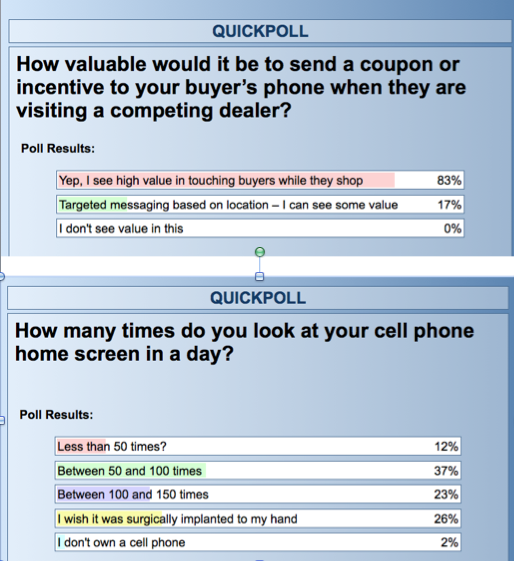
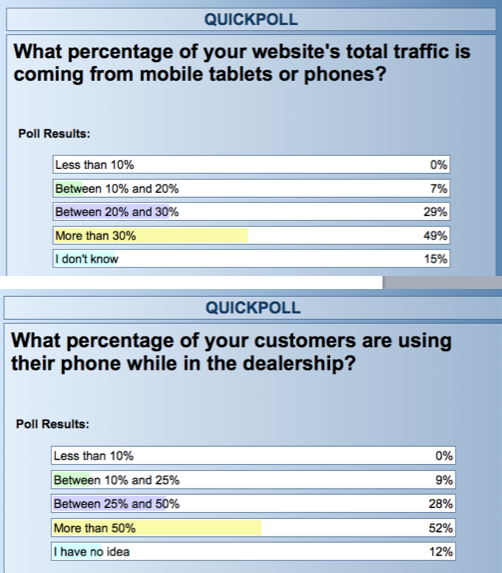
We decided to ask our participants some poll questions and the results were very eye opening:


Saturday, March 1, 2014

AutoMotion TV Brings Apps to the Automotive Dealership Market on Windows 8 and Windows Phone 8

Automotive App Leaders Expand to Windows Platform to Increase Mobile Outreach Between Dealers and Consumers.

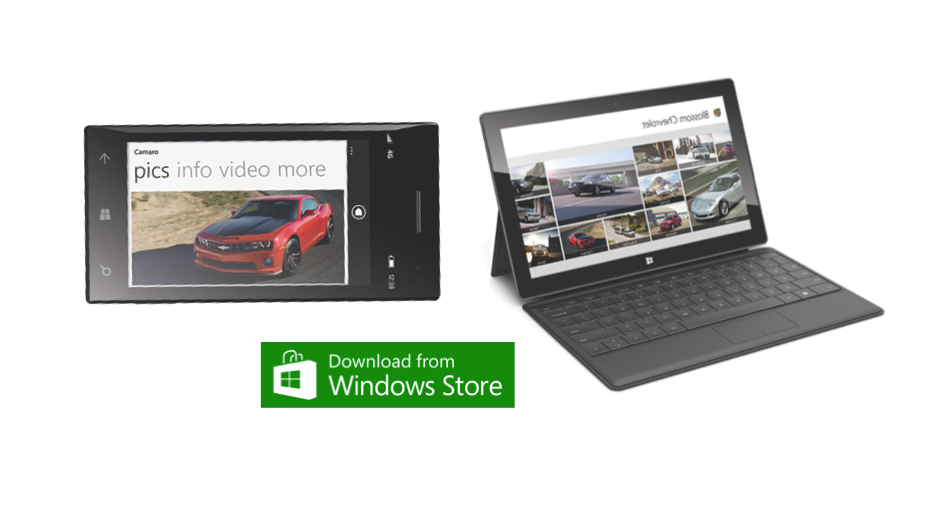
Minneapolis, MN – AutoMotion TV today announced the release of the AutoMotion TV Dealer apps for Windows 8 and Windows Phone 8. With more and more automotive shoppers using Windows 8 on their tablet and using Windows Phone 8 devices, dealers can now provide customers quick access to inventory, service scheduling, live chat, and more through interactive apps for Windows 8 and Windows Phone 8.

“We’re excited to connect dealers and shoppers through mobile apps,” stated AutoMotion TV President, Ben Anderson. “Windows 8 and Windows Phone 8 users represent an increasing percentage of the mobile market, and we’re pleased to provide a quicker and more convenient way for them to interface with their dealership.”

“We’re pleased AutoMotion TV is bringing its existing dealer base, technology, and mobile leadership in the automotive sector to Windows 8 and Windows Phone 8,” stated John Richards, senior director of Windows App Marketing for Microsoft Corp. “With the AutoMotion TV Dealer apps, Windows 8 and Windows Phone 8 users looking to purchase a vehicle can easily and conveniently interact with dealers at home or on-the-go from inventory research to service scheduling.”

Using the AutoMotion TV apps for Windows 8 and Windows Phone 8, you can research new vehicles through beautiful imagery and video, chat with a live dealer representative, or schedule vehicle service through the app. The app gives instant access to current dealer inventory, incentives, and vehicle trade-in valuations.

The AutoMotion TV apps for Windows 8 and Windows Phone 8 are now available for download in the Windows Store and Windows Phone Store respectively.

About AutoMotion TV

AutoMotionTV Dealer App is a leader in mobile apps for automotive dealers. The company’s mobile solutions provide customer access to dealer inventory, service scheduling, live chat, and more. AutoMotionTV helps dealers drive more sales and service revenue through mobile.  

Tuesday, April 12, 2011

IDC: 8 Stats Why the Post-PC, Mobile Era Is Upon Us

Eric Lai | Mar 16, 2011

Big market researchers are rarely at the forefront of tech trends, as they must balance the viewpoints of startups, established vendors and enterprise IT buyers.

What firms like Gartner and IDC excel at is being a belwether for emerging trends, and providing empirical validation for them.

At its Directions 2011 conference in San Jose today, IDC Corp. analysts argued that we are entering the post-PC era of computing overflowing with data, devices and apps.

Ironically, this is a drum that SAP has been banging loudly for the past year. And gratifyingly, it is nearly identical to the Unwired Enterprise vision that Sybase has promoted since the middle of the last decade (see this whitepaper, which I had a hand in, summarizing this vision).

Here are some of the stats IDC shared, along with the implications.

1. Stat: It is 25 years (1986) since the industry began moving en masse towards client/server away from mainframes.

Implication: We are at similar transition from PC-server towards mobile devices. Already, there are “trillions of smart ‘things’ (sensors, devices, etc.), billions of users, millions of apps,” says Frank Gens, chief analyst for IDC.

2. Stat: 3 of the biggest companies that failed to transition to client-server were Cullinet (database maker that avoided new retailing model), Wang (word processor maker that chose CPU ignored by software developers) and Digital (overvalued by Wall Street).

Implication: Companies that made right moves made the leap: Dell (sold PCs by phone), EMC (took regular hard disks into the enterprise) and SAP (brought ERP from mainframe to client-server).

3. Stat: 80% of new enterprise apps to be distributed via the cloud. By 2014, 30% of enterprise application spending will be on the cloud.

Implication: Even enterprise apps will follow Apple’s App Store model, argues Gens.

4. Stat: There are 1.3 million mobile apps today, versus 50,000 to 75,000 PC applications, says Gens.

Implication: Most new apps will be vertical or industry-specific solutions.

5. Stat: 1.8 Zettabytes (1.8 billion TERABYTES) of data will be stored in 2011, up 47% year-over-year. That will grow to 7 Zettabytes in 2014.

Implication: “This is about BIG data,” says Gens, not relational databases. “This BREAKS traditional databases.”

6. Stat: 500 million smartphones and tablets to sell in 2011, versus 380 million PCs.

Implication: This is the transition year in which devices will pass PCs permanently.

7. Stat: Only 50% of smartphones and 20% of tablets in enterprise bought by IT, according to fall 2010 IDC survey.

Implication: Bring Your Own Device is huge, says IDC analyst Bob O’Donnell, and managers will need to account for that.

8. Stat: Worldwide, the average affluent consumer owns 4.8 devices, according to a recent IDC survey. In the US, that is up to 6.6 devices.

Implication: The market is hugely fragmented.


View Original Article: B2C

More information on the AutoMotionTV Dealer App.

Thursday, March 17, 2011

Embracing Automotive Mobile Marketing in Car Dealerships

by Missy Jensen on Mar 3, 2011

According to a recent cell phone study by Pew Internet, “85% of Americans ages 18 and older own a cell phone, making it by far the most popular device among adults” and a great opportunity for car dealerships to utilize for automotive mobile marketing purposes. Not too surprisingly, the study also found that a great deal of time spent on a mobile phone has nothing to do with talking! A large majority of people use their mobile phones to text, as well as visit social networks, surf the Internet and take/share photos. This type of behavior qualifies for a great opportunity to engage your target market in automotive sms marketing services for your dealership.

Since it is clearly evident that Americans have rapidly embraced mobile phones – and their various functionalities – dealerships should consider how to utilize mobile technology to improve automotive mobile marketing efforts. Here are a few recommended automotive text messaging solutions your dealership should strongly consider implementing:

1. Automotive Text Messaging Solutions: By nature, text messaging is meant to be short (160 characters) and to the point. It is well suited for sending relevant, timely and brief messages that are speaking directly to a customer’s need and/or interest. Of course, like other modes of communication, unwanted, irrelevant and unnecessary text messages will damage your relationship with customers. Therefore, some good ways to use text messaging in your automotive mobile marketing efforts – without becoming an annoyance – is to send texts related to:

  • Service: service reminders, appointment reminders, missed appointment notifications, additional service recommendations, arrival of a special parts order, and thank you.
  • Sales: notification of approaching lease termination, birthday, anniversary, and thank you.

It’s a good idea to get started with text messaging as a form of communication for your dealership because your current young target audience members are texting fanatics. Young adults (ages 18-24) exchange on average 1,630 messages monthly, according to Nielsen. Note: You definitely want to get your customers to opt-in to receive text messages. This can be done at the dealership or by implementing an opt-in submission form on your website. Either way, your dealership must gain consent before sending texts to customers and have an opt-out option available should they no longer wish to receive texts from your dealership.

2. QR Codes: If you don’t know what QR codes are, they are the 2-dimensional barcodes that store information that can be read by a mobile phone or device. You’ve likely seen everywhere lately: magazine advertisements, promotional pieces and emails, for example. They are easily scannable barcodes that, when you point your smartphone camera at them, they provide a message, open a website or produce other branded content. The use of QR Codes is a step toward fully taking advantage of mobile marketing for the automotive industry.

While many OEMs are implementing QR codes in their automotive mobile marketing efforts, car dealerships at the local level can also use them to engage customers in various ways. One way is to interact with those who peruse their lots during off hours. A QR code for each used vehicle can be created through a free QR-generator site (such as Kaywa), printed (whether on paper or in sticker form) and posted on the vehicle. When customers scan the code, they are brought to a page on your dealership’s website regarding that specific vehicle to obtain any additional information and even specials on pricing/financing. QR codes can also be included in your print advertising, whether it be your newspaper ads or direct mail pieces…again, leading traffic to your website. Lastly, your dealership can place a QR code on service department receipts to lead customers to an online customer service survey.

Though QR codes are fairly new, they are definitely growing in popularity and serve as a great tool to bridge the real and digital world.

3. Automotive Mobile Apps – Smart phone applications are all the rage. How many times have you heard “There’s an app for that!”? Well, even car dealerships are intrigued by the possibility of developing a customized app.

AutoNation
has developed a customized app that allows you to explore their new and used car inventory from the comfort of your Smart Phone. Additionally, it allows you to estimate the Kelley Blue Book value of your current car.

Similar to QR codes above, Mobile Apps allow your dealership to maintain an additional touch point with your customers, providing critical information about vehicles and your dealership (such as directions and contact information) in a very user friendly way. If your current website isn’t mobile optimized, then a mobile app is the best way to share your critical web content to people surfing on a smartphone.

We’ve listed a few ways above for dealerships to include mobile as part of their overall automotive mobile marketing efforts. Has your dealership implemented any mobile efforts? What has your experience been thus far?

~ Missy Jensen, Social Media Manager at DMEautomotive

Bio:
Missy designs, deploys and maintains the social media initiatives for DMEautomotive in an effort to increase brand awareness, distribute company and industry news, provide updates on products and services and promote consumer engagement. Missy enjoys the process of learning; researching and watching projects come to fruition!

Prior to her transformation into a web specialist and work with DMEautomotive, she has 10 years of experience in the marketing and communications industry. Missy served as the Director, Handicapping & Communications for a regional golf association and helped successfully launch and maintain a cutting edge technology-based ticket resale program on behalf of the St. Louis Cardinals.

Missy attended St. Lawrence University where she graduated Magna Cum Laude with a BS in Psychology. She also holds a Master’s Degree from Miami University in Oxford, OH. She can be reached at missy.jensen@dmeautomotive.com and check her out on LinkedIn.

See Original Article: DrivingSales

Wednesday, March 16, 2011

SBA Names Minnesota Young Entrepreneur of the Year


MINNEAPOLIS – Ben Anderson, President of Cinemotion, LLC based in Minneapolis, Minn., has been named the Minnesota Young Entrepreneur of the Year by the U.S. Small Business Administration.

The Young Entrepreneur of the Year is selected annually based on success as measured by sales and profits, increased employment opportunities created by the business, development and/or utilization of innovative or creative business methods, and demonstrated entrepreneurial potential necessary for long-term business success and economic growth. Michael Ryan, Director of the Twin Cities Small Business Development Center at the University of St. Thomas, nominated Anderson for this award.

Anderson started Cinemotion with meager savings and little equipment out of his student apartment in 2001 while studying entrepreneurship at the University of St. Thomas. Cinemotion started as a video production company, producing high-quality advertisements and videos for corporate clients.

In 2006, Anderson introduced the AutoMotionTV Video Library. The company created a library of vehicle videos and currently licenses those videos to thousands of auto dealerships for use in online marketing efforts.

In 2010, Cinemotion introduced the AutoMotionTV Dealer App Creation Platform. It’s a mobile-focused tool that helps manufacturers and dealers create long-term customer relationship channels using mobile apps.

Now based in downtown Minneapolis, Cinemotion has grown from a one-man operation to over twenty full and part time employees. The company reached its first profitable quarter in 2008, doubled in size in 2009, and expects to double again in 2011.

Anderson’s initial success led to a 2005 Pentair Prize “Student Entrepreneur of the Year: and a $5,000 scholarship for the University of St. Thomas College of Business. Anderson also received the 2006 Minnesota Collegiate Entrepreneur Award and was named Great Lakes Regional Collegiate entrepreneur by the Anderson Entrepreneurial Center. (And no, he’s not related to the family for whom the center is named.)

Dr. Alec Johnson, associate professor entrepreneurship in the St. Thomas Opus college of Business, lauded Anderson’ entrepreneurial qualities: “He is a problem solver and doesn’t take ‘no’ for an answer. He shows a willingness to reinvent himself, and that’s an impressive quality to have at this stage in his career.”

For more information:

Ben Anderson

President

Cinemotion, LLC

123 3rd Street North

Suite 604

Minneapolis, MN 55401

612-353-4125

Tuesday, March 15, 2011

Data-Driven Marketing: Mobile by the Numbers

Jeff Adelson-Yan | Mar 01, 2011

Thanks to a recent webinar we watched presented by Google, we have these number to present to you…

Over Half of all Americans will have smart phones by the end of 2011

17% of all auto industry searches are from mobile devices

79% of large advertisers do not have a mobile optimized site.

Mobile web use increases greatly on weekends as desktop web use decreases.

What does all of this tell us? It’s time to get serious about creating mobile strategies and thanks to a recent webinar from Google, we have some great tips on how to do just that. I’ve said it before and I’ll say it again, the time to hesitate has passed. Check out some of these statistics…

According to eMarketer, mobile transactions will total nearly $1 trillion by 2014. WOW.

Mobile is Local and 33% of mobile searches are local.

Mobile is a Shopping Companion as 79% of smart phone users will use their phones when at a store while considering a purchase decision.

So now that you’ve seen the raw statistics. Here’s what you need to do:

Optimize Website for Mobile Use- ease of use, navigation and simplification of site is important. See our post Data-Driven Marketing Tips for Optimizing for Mobile.

Think Local – and assess how your company can use mobile to provide value. This could come in a variety of ways, from Store locator options, to using QR codes on products to allow for greater information distribution. Put yourself in the shoppers shoes, they’re racing around during their daily life and bam they need X product. How can you delivery great customer service to them in a mobile fashion? After looking up a local business on their smart phone, 61% of users called the business and 59% visited.

Leverage Mobile Features – There are so many great ways to optimize for mobile now. Features like Click to call, location extensions, site links for navigation on site, and use of display advertising can all be implemented to better engage the consumer. Consider that mobile is immediate and a shopping companion.

Create Separate Campaigns for Mobile- Organization in any ad campaign is critical, and this is certainly the case with mobile. By segmenting your adwords into a mobile only campaign you can bid more aggressively for higher rank.

Test and Iterate – Finally continue to test and optimize your strategy.


View Original Article: B2C

Thursday, March 10, 2011

Using Web site best practice to increase mobile site conversion

Mark Simpson

Mark Simpson is founder and president of Maxymiser

By Mark Simpson

At the beginning of every year for the past decade, we have heard industry experts proclaim that it will be the “year of the mobile Web.”

Now we are saying it again, but this time it looks like the real deal. This year will be the true test of brand marketers’ mobile madness and aptitude as consumers continue to turn to their Web-enabled mobile devices as a daily means of quick, on-the-go brand interaction, buying research and, now, shopping.


A recent comScore survey found that the United States is home to 60.7 million smartphone users, up 14 percent from the previous quarter.

With smartphone use on the rise, mobile marketers who are not using conversion optimization and Web site personalization techniques on their mobile sites will fall behind as mobile-savvy competitors take the lead in market share growth in 2011.

Optimizing mobile sites
Mobile site development and usability have been challenging, uncharted territories for most online marketers. To be effective, I have found that mobile sites need to be:

• Tested (multivariate and A/B testing) and optimized so that consumers are continuously served relevant (and only relevant) content

• Designed specifically so that content and design fit the limited size of mobile screens

• Personalized so that consumers receive the information they need, when they need it

It is critical to remember that not everything is relevant in a mobile environment.

The trick is to figure out what your customers need most from you in their on-the-go lives.

For example, retail consumers typically use their handheld devices to locate stores quickly or compare prices, but not to browse through dense pages of product information and promotional offers.

Similarly, banking consumers might feel comfortable using their handheld devices to check their account balances, but not to apply for a mortgage.

Make sure you know what your customers need and want from their mobile environment, before you determine the content, design and layout.

Making mobile marketing work
The world of mobile marketing is becoming increasingly competitive as more brands dip their toes in the mobile waters.

We experienced a very similar trend a few years ago when conversion optimization for standard Web sites emerged.

Multivariate testing, A/B testing, segment targeting and Web site personalization on traditional Web sites have proven to be very effective tools for increasing conversion rates and online revenue.

But now, marketers must put the same tools and best practices to work for handhelds.

Amazon’s continued dominance in the ecommerce industry is a result of its ability to rigorously test, personalize and optimize its sites.

Online marketers who follow Amazon’s lead for their mobile site content from the onset will gain a foothold in the mobile commerce industry. Those who do not will lose the opportunity to lead the market.

Get ahead of the game
Fortunately, we now possess the technology to continuously perform mobile A/B and multivariate testing, which pinpoints the most relevant combination of content and design for your audience.

In my experience, testing is the fastest and most effective way to pull out the strongest features of your mobile site and optimize accordingly.

However, testing solutions are only truly valuable if you make the content and design modifications in real-time.

Often, such technologies also have the ability to recognize differences between the wide range of mobile devices and platforms, and serve the most relevant content in an effective design, based on screen size, resolution and alignment.

Mobile site optimization ensures that your customers can receive the content they need, how they need it and when they need it most.

Personalize the mobile experience
Once your mobile site is optimized for your general audience, it is important to personalize the experience for each individual.

Web site personalization for the mobile experience further ensures that customers’ needs are met, but also allows them to feel a closer connection to your brand.

Handheld digital devices serve personal data storage purposes for emails, appointments and presentations, often painting a near-complete picture of a person’s lifestyle and preferences.

Many consumers consider these devices to be an extension of them, which is why it is crucial for them to be able to access a mobile site that meets their individual needs and desires.

The key to Web site personalization is a strong conversion optimization platform that allows you to reach consumers with ideal content for the mobile environment.

Due to the lack of real estate for multiple messages, it is more important for mobile sites to be personalized to the individual than traditional Web sites.

However, while using data about individuals and how they interact with a brand through traditional online means, the mobile Web and other channels provide an opportunity for marketers to nail their brand messaging.

Marketers must combine and analyze information about a consumer’s device, including the time of the day, day of the week, the points from which they access specific pages and their movement throughout the mobile site.

By serving the right information to the right individual in the right format, marketers can make every visitor count.

Allow for communication between channels
Time and time again, I see companies optimizing in silos, failing to properly connect their mobile efforts with the rest of their marketing strategy.

Yet, customers are, and will continue to, engage with brands across multiple channels.

Whether a customer uses a Web site, mobile site or bricks-and-mortar store, her brand experience should be consistent and personalized to her preferences and needs – regardless of the channel.

Few marketers currently take advantage of multichannel marketing tools that can create a 360-degree detailed view of each customer, and empower effective, automated Web site personalization during their mobile experience and beyond.

Marketers should be engaging with multichannel marketing now to outperform competitors.

AS THE MOBILE expands over the next year and more companies understand the benefits of these tools, conversion optimization and Web site personalization services for mobile are likely to gain significant popularity.

Marketers that take the leap today with these services will certainly find themselves ahead of the curve tomorrow.

Mark Simpson is founder and president of Maxymiser Inc., New York. Reach him at mark@maxymiser.com.

Monday, March 7, 2011

Using QR Codes In Your Dealership


QR Codes

No doubt you’ve heard of QR codes or have at least seen these two dimensional pieces of art in a variety of places. QR stands for “quick response”, developed by the Denso division of Toyota to quickly identify parts. Widely used in many other parts of the world, QR codes have taken a while to catch on with US consumers. With the rush of mobile devices, QR codes are now quick finding their way into a variety of marketing venues.

In a basic sense, a QR code simply replaces a step for the mobile user. Instead of manually inputting a URL or dialing a phone number, a scan of a QR code can accomplish the same task. Simply scan the code using your mobile device and be taken to the virtual destination. Before dismissing QR codes as a simple novelty, note that in today’s fast paced environment, typing in a URL or dialing a number may be too distracting, time consuming, resulting no user action. QR codes offer yet another time-saver for users.

How They Work

Some mobile devices now come standard with a QR reader, others require a download from an app store. Most readers are free, while some with advanced features are offered at a minimal price. Either can be obtained by simply searching “QR reader” in your app store. The QR reader uses the camera in your mobile device to scan QR codes. Try it here, it’s simple and fast.

Why QR Codes for Car

Shoppers?

QR codes have been shown

to be particularly effective with research-intensive products. Cellar Key uses QR codes on bottles of wine to inform, entertain, and motivate buyers. Jennifer Van Grove’s article at Mashable notes that “Scanners can watch videos about the wine in question, get video tours of wineries, discover food pairings, read up on harvest and tasting notes and check out reviews.”

Could the same strategy be used on the dealer lot?

Create your QR code

There are a variety of free options to create QR codes for your marketing efforts:

Kaywa is a QR code generator for URLs, text, phone numbers, or SMS.

iCandy aids in tracking around generator codes and provides some analytics.

Google’s take on QR codes mixes in URL shorteners and includes tracking services.


Market your Code

Window Stickers: We’ve been seeing some innovative dealers use QR codes on the lot (Window stickers with printed QR Codes help consumers). Lot shoppers, especially those browsing afterhours, are able to scan, download a dealer app, and check inventory right on their mobile phone.

Marketing Materials: While an obvious use, this should not be overlooked. Include business cards, fliers, brochures, and mass mail campaigns in the list of potentials. Use QR codes on envelopes to increase your direct mail response rates.

Specials: Consider incentivizing your customer with a coupon or discount through a QR code. Hide the QR code inside your Facebook page or website. Hide it in your store or on the lot – create a treasure hunt.

On business cards: A fast and simple way to use QR codes for your own professional purposes is to place them on business cards. Generate a barcode that directs scanners to your online resume, small business Facebook Page or your website to help new contacts find you or your business faster.

On marketing materials: You’ve got fliers, brochures, programs, handouts, whitepapers and a myriad of other materials in your media kit. Add QR codes to direct viewers to a particular how-to video, send them to a Flickr photo set, get them to follow you on Twitter, or point them to a mobile-friendly landing page that promotes a new campaign. For inspiration, check out what the Detroid Red Wings did with QR codes in their arena programs.

Educate the user

If you use QR codes in marketing, be aware that not all consumers know what it is or how to use a QR code. Include a brief description below your code on how to scan and how to obtain a QR reader.

If you’re going to use QR codes for small business marketing, you’ll want to keep in mind that QR codes — and the apps that scan them — are still foreign to most people.

Yes, more and more people are starting to associate the codes with action, but never assume your customers will know what to do. Make it a point to spell out how to scan the QR code, and help instruct customers on where they can grab scanner apps.

Tracking QR Codes

While some QR generators contain analytics, simple use of traceable URL shorteners like bit.ly can give you a basic analysis of your campaign. Use a unique traceable shortened URL as the destination of your QR code to get a singular view of your QR campaign’s effectiveness.

All In All

Don’t just assume that you might gain some traction with a campaign based solely on the novelty or the “buzz” surrounding QR Code right now. I encourage you to think down the road and execute creatively in your use of QR Codes. There is virtually no limit to the ways in which you might make excellent use of this technology to enhance your advertising and marketing efforts in order to achieve your goals.

How could you use QR codes?

by Gary Sanders on Feb 21, 2011

If you have been to an airport or looked at a Sunday newspaper ad, QR codes are growing. So how can we use them?


What if QR codes became a virtual walk around? We may not be ready to have them on the showroom (yet), but what about any car you have on display offsite?


What if the Manufactures used them at the Auto Shows?

What if this code talked about the fuel economy of the Lexus RX350?

cardealerblog.jpg


What if this code talked about the Smart Access Key and Push Button Start?

cardealerblog.jpg

What if this code talked about the RX Performance and the 3.5-liter V6 Engine?


cardealerblog.jpg

As I continue to learn more about them, the ideas are limitless. The one recommendation is to create a separate site that is compatible for a smart phone. Don’t send it to your vendors sites like Cobalt and Dealer.com because it opens your dealers mobile site. I am testing out the use of our codes on StevinsonLexusofLakewood.org which is hosted by Word Press.

Are you using them in your dealer? Let the Driving Sales community know what you are doing.


See the original article: DrivingSales

Friday, March 4, 2011

How To Get Started In Mobile Marketing

Michael Brenner | Feb 08, 2011


Mobile is one of the hottest topics in B2B Marketing in 2011. More businesses are embracing smart-phones and tablets as part of their support and operations. And more people are moving their search and content interaction activities to their mobile devices.

To meet this change in media habits, Marketers will spend upwards of $13 or $14 Billion dollars on Mobile Marketing in 2011 according to the Mobile Marketing Association as we discussed in Mobile Marketing In 2011 – Are You Ready? With all this excitement, B2B Marketers are looking to build mobile into their marketing plans but are facing challenges in how to get started.

SMS, MMS, WAP…There are a ton of acronyms and terms that can seem confusing. And there is not much experience in B2B Marketing with successful mobile campaigns. So here are some things to keep in mind when considering concrete Mobile Marketing activities:

  • Presence. You need to be present where your customers are searching for information.
  • Relevance. The content needs to meet a specific need and be delivered in the proper context for mobile.
  • Keep It Simple. The mobile platform demands simplicity so users aren’t frustrated.
  • Real-time. It’s gotta be fast or don’t do it.

What kind of tactics should you consider in order to get started in Mobile Marketing:

  1. Mobile Search.With the increases in adoption of 3G and 4G mobile smart-phones, the volume of searches happening on mobile phones is going to continue to increase. According to TechCrunch, Mobile Search is expected to grow to 20% of all searches by 2012. The article suggests two main areas to focus on in mobile search. First, the display area is much smaller. This means each search yields far fewer results and thus higher click-through rates. The other focus should be Local Search, Search marketers need to consider geo-targeting their ads where appropriate.
  2. Mobile Display.There are so many different phones and Operating System (OS) configurations that the number of formats can be overwhelming. Marketers need to plan for this in their budgets. There is also a myriad of exchange, network and service providers to chose from including Burstly, InMobi, Apple iAd plus the traditional players like Google’s AdMob, Yahoo and Bing.
  3. Text and Video.Both of these content approaches has its unique challenges. For text, permission is a huge concern. And you want to make sure the medium is used in the right context. Updates at trade shows is one good example of how to use SMS and MMS messages. In video, formats is an issue with the Apple OS and any video size and length needs to be throught through very carefully.
  4. Games and Apps. Last year it seemed like everyone wanted to develop a game or an ”app.” For B2B, I have already questioned the role of Augmented Reality For B2B Marketing in 2011? While I do believe B2B Marketers need to be testing new ad formats, I’m not sure this will see wide adoption in 2011. However, if B2B marketers want to create a truly unique and highly interactive experience, then this may be an area to explore.

I continue to be very interested in the latest news and tips on Mobile for B2B Marketing . I hope this helps you to start thinking about how to get started. Let me know if I missed anything. This is a compicated and highly evolving space so would love to hear your feedback.


Read the Original Article: Business 2 Community