Showing posts with label custom app. Show all posts

Saturday, March 1, 2014

AutoMotion TV Brings Apps to the Automotive Dealership Market on Windows 8 and Windows Phone 8

Automotive App Leaders Expand to Windows Platform to Increase Mobile Outreach Between Dealers and Consumers.

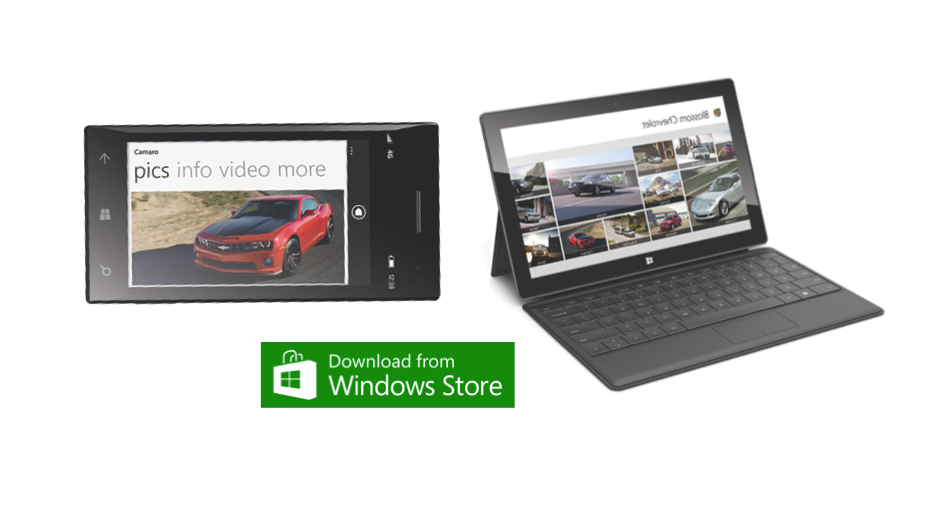
Minneapolis, MN – AutoMotion TV today announced the release of the AutoMotion TV Dealer apps for Windows 8 and Windows Phone 8. With more and more automotive shoppers using Windows 8 on their tablet and using Windows Phone 8 devices, dealers can now provide customers quick access to inventory, service scheduling, live chat, and more through interactive apps for Windows 8 and Windows Phone 8.

“We’re excited to connect dealers and shoppers through mobile apps,” stated AutoMotion TV President, Ben Anderson. “Windows 8 and Windows Phone 8 users represent an increasing percentage of the mobile market, and we’re pleased to provide a quicker and more convenient way for them to interface with their dealership.”

“We’re pleased AutoMotion TV is bringing its existing dealer base, technology, and mobile leadership in the automotive sector to Windows 8 and Windows Phone 8,” stated John Richards, senior director of Windows App Marketing for Microsoft Corp. “With the AutoMotion TV Dealer apps, Windows 8 and Windows Phone 8 users looking to purchase a vehicle can easily and conveniently interact with dealers at home or on-the-go from inventory research to service scheduling.”

Using the AutoMotion TV apps for Windows 8 and Windows Phone 8, you can research new vehicles through beautiful imagery and video, chat with a live dealer representative, or schedule vehicle service through the app. The app gives instant access to current dealer inventory, incentives, and vehicle trade-in valuations.

The AutoMotion TV apps for Windows 8 and Windows Phone 8 are now available for download in the Windows Store and Windows Phone Store respectively.

About AutoMotion TV

AutoMotionTV Dealer App is a leader in mobile apps for automotive dealers. The company’s mobile solutions provide customer access to dealer inventory, service scheduling, live chat, and more. AutoMotionTV helps dealers drive more sales and service revenue through mobile.  

Tuesday, March 22, 2011

Why clicks don’t work in a mobile world

Zephrin Lasker

Zephrin Lasker is CEO of Pontiflex

By Zephrin Lasker

In an August 2010 article in Wired Magazine, Chris Anderson proclaimed that the Internet as we know it is dead.

“Over the past few years, one of the most important shifts in the digital world has been the move from the wide-open Web to semi-closed platforms (apps) that use the Internet for transport but not the browser for display. It’s driven primarily by the rise of the iPhone model of mobile computing.”

The Internet, Mr. Anderson concludes, is “less about the searching and more about the getting.”

Jobs throws book
Smartphone adoption rates have greatly increased the use of mobile applications.

According to Morgan Stanley, Internet mobile adoption rates are ramping up faster than the desktop Internet did, and the number of smartphone users is increasing exponentially.

The shift in consumer habits has led to mobile quickly becoming a must-buy for advertisers.

But capitalizing on the proliferation of mobile apps via advertising is easier said than done.

A large number of mobile advertising solutions today rely on click-based online display banners.

Yet click-based units do not create user-friendly experiences on mobile devices.

Steve Jobs recognized this problem when launching Apple’s mobile platform, iAd.

“Today when you click on a banner ad, it yanks you out of your app and throws you onto the advertiser’s Web page,” Mr. Jobs said at the 2010 iOS conference. “So people don’t click on the ads.”

Mobile ads that force people out of an app and take them to a clunky Web browser offer a sub-optimal user experience.

For this reason, the last year or so has seen the rise of in-app advertising solutions that aim to address this problem and engage users directly within apps.

According to Borrell Associates, the in-app mobile advertising market will rocket to $8 billion by 2015.

Two do
Today, there are primarily two types of in-app advertising solutions.

The first focuses on delivering a TV commercial-like experience.

Apple’s iAds platform, which delivers a branded experience in mobile app environments, is an example of this kind of ad.

IAd offers a deep branding experience at the moment of engagement and brands such as AT&T, BMW, Campbell, Dove and Nissan have used this model to engage consumers within mobile apps on the Apple iTunes store.

The second half of 2010 saw the launch of a new kind of in-app advertising on both the Android and iPhone platforms – mobile signup ads.

Mobile signup ads work by presenting users with a simple sign-up form where they can opt in to receive email communications from brands.

The advertiser then engages the user with branding messages after the initial touch point – via email, Facebook or Twitter.

Major brands such as the ASPCA, Tommy Hilfiger and Tiger Direct use signup advertising to deliver relevant deals and information to their prospect bases.

In-app mobile advertising may very well be what marketers need to finally kick the click.

Both iAds and mobile signup ads will allow marketers to measure mobile ad campaigns using more meaningful metrics than the abstract click-through.

With iAds, marketers can measure brand engagement metrics.

With signup ads, they can measure the number of people who have signed up and the quality of these signups, in addition to measuring how consumers respond over a lifetime via email or Facebook.

In both cases, the marketer gets a more meaningful view of the campaign and how consumers perceive their brand.

The jury is still out on whether click-based advertising works in the online world, but one thing is certain: the click-reliant model definitely will not work in the mobile world.

Zephrin Lasker is CEO of Pontiflex, New York. Reach him atzlasker@pontiflex.com.


View Original Article: Mobile Marketer

Tuesday, March 15, 2011

Data-Driven Marketing: Mobile by the Numbers

Jeff Adelson-Yan | Mar 01, 2011

Thanks to a recent webinar we watched presented by Google, we have these number to present to you…

Over Half of all Americans will have smart phones by the end of 2011

17% of all auto industry searches are from mobile devices

79% of large advertisers do not have a mobile optimized site.

Mobile web use increases greatly on weekends as desktop web use decreases.

What does all of this tell us? It’s time to get serious about creating mobile strategies and thanks to a recent webinar from Google, we have some great tips on how to do just that. I’ve said it before and I’ll say it again, the time to hesitate has passed. Check out some of these statistics…

According to eMarketer, mobile transactions will total nearly $1 trillion by 2014. WOW.

Mobile is Local and 33% of mobile searches are local.

Mobile is a Shopping Companion as 79% of smart phone users will use their phones when at a store while considering a purchase decision.

So now that you’ve seen the raw statistics. Here’s what you need to do:

Optimize Website for Mobile Use- ease of use, navigation and simplification of site is important. See our post Data-Driven Marketing Tips for Optimizing for Mobile.

Think Local – and assess how your company can use mobile to provide value. This could come in a variety of ways, from Store locator options, to using QR codes on products to allow for greater information distribution. Put yourself in the shoppers shoes, they’re racing around during their daily life and bam they need X product. How can you delivery great customer service to them in a mobile fashion? After looking up a local business on their smart phone, 61% of users called the business and 59% visited.

Leverage Mobile Features – There are so many great ways to optimize for mobile now. Features like Click to call, location extensions, site links for navigation on site, and use of display advertising can all be implemented to better engage the consumer. Consider that mobile is immediate and a shopping companion.

Create Separate Campaigns for Mobile- Organization in any ad campaign is critical, and this is certainly the case with mobile. By segmenting your adwords into a mobile only campaign you can bid more aggressively for higher rank.

Test and Iterate – Finally continue to test and optimize your strategy.


View Original Article: B2C

Friday, February 18, 2011

Adding mobile to multichannel commerce big driver for ebusiness success in 2011

By Dan Butcher

February 1, 2011

Redemption of mobile coupons via 2D-bar-code readers is the way of the future for retailers

Consumers are demanding content-driven, multichannel commerce that includes mobile access, according to a survey of business-to-consumer and business-to-business organizations by Endeca Technologies Inc.

The survey of 430 B2C and 160 B2B professionals revealed business results for 2010 as well areas of focus for 2011. Today’s consumers demand user-centric, anytime/anywhere information, and expect their experience on a mobile device, online or in-store be interchangeable – and on their terms, per Endeca.

“Mobile ads will account for $5 billion in sales in 2011—and there is a reason for that,” said Katrina Gosek, media and publishing market lead for the ebusiness team at Endeca, Cambridge, MA. “Mobile is the long-awaited link to total customer insight, and the vehicle for marketing to them in hyper-personalized ways.

“When consuming traditional static content, readers tend to be fairly focused on the task at hand,” she said. “The mobile experience is different – and it opens new opportunities to monetize content and generate revenue.

“Mobile users are generally more time-constrained, goal-oriented, and ready to click away if not instantly engaged—therein lies the challenge: capturing and holding the user’s attention, presenting just the right content in the context of who they are, what they like, and where they are.”

Endeca’s clients include Boeing, Cox Newspapers, the United States Department of Justice, Ford Motor Co., Hyatt, IBM, the Library of Congress, Texas Instruments and Walmart.com.

Mix it up
With the onslaught of mobile programs and unprecedented investment from retailers, publishers and manufacturers, brands must differentiate their mobile marketing programs and ad placements by knowing their consumers and how they use mobile.

Keeping mobile marketing programs fresh is critical, and how marketers place content is key.
Marketers should experiment with different programs and concentrate on those that prove to be highest-value.

“Push location-based promotions via SMS based on individual search history, experiment with video, use their current location to influence what medium should be used, and – if your budget permits – increase engagement with rich interactive ads in apps,” Ms. Gosek said. “The minute they log in, consumers expect mobile content to be automatically tailored to who they are and where they are.

“To deliver this experience and make it effective, content providers should not just seek to deliver a cookie-cutter experience,” she said. “Take time to learn what your users mobile content habits are – how they access your content online, what your brand is known for, and what users expect.

“How can you make this a compelling and convenient experience for them – and different from your competitors?”

Make mobile ads relevant
One of the great advantages of mobile devices is the ability to know where users are when they are connected.

Users have not only know grown comfortable with location-based services, but now expect hyper-personalized content as part of the mobile experience – prioritizing convenience over privacy, per Endeca.

Ms. Gosek said that monetizing online content with ads is nothing new, but mobile allows these ads to be incredibly effective.

Marketers should ensure that they are taking advantage of the transparency of the mobile channel by providing targeted, in-context ads based on the user’s physical location, search/browse history, social media usage and personal preferences.

Boost your brand with paid apps
More organizations are offering paid applications to offer this premium experience.

Having a free application is a great way to open relationships, but premium apps offers an opportunity to manage the dialogue with a brand’s most valuable customers in its base while being a source of added revenue, per Ms. Gosek.

Sports Illustrated recently released two versions of its iPad application—paid and free—and found that many readers upgraded to the premium version after initially accessing the free content.

The growing readership of the paid Wall Street Journal application is another example of how users are willing to upgrade to paid services if they see exclusive content or special features.

Delivering content-driven multichannel experience a priority
Responses gathered from 430 B2C ecommerce professionals from retail, media and consumer manufacturing organizations showed that mobile ranks number one for new areas of investment.

Thirty-five percent state they have a mobile program in place, while 30 percent are in early stages of implementation and 25 percent are investigating options and plan to have a live mobile program in 2011.

Less than 5 percent reported no mobile initiatives in the next 12 months.

Mobile Commerce Daily’s Dan Butcher interviewed Brenna Johnson, B2C market lead for the ebusiness team at Endeca, based in Cambridge, MA. Here is what she had to say:

What are some of the key takeaways from the survey related to mobile marketing and advertising?
Having a mobile program is no longer up for debate. Less than 5 percent of respondents reported no mobile initiatives in the next 12 months.

Ecommerce is rushing to capitalize on the billions up for grabs in the mobile channel, with 35 percent stating they have a mobile program in place and will continue to invest in it over the next year.

Thirty percent are in the early stages of implementation, and 25 percent are currently investigating options with the goal of having a live mobile program in 2011.

More retailers are investing in applications over the mobile Web in 2011.

Thirty-eight percent of retailers reported mobile applications as a top investment, while 31 percent indicated investment in the mobile Web.

The trend towards applications in retail remains consistent, with retailers investing more in the user experience of application environments, and then delivering a mobile-optimized Web site to meet the greater volume of browser-based traffic.

What are the key takeaways related to mobile commerce and payments?
2010 was the year that retailers planned and worked out early mobile kinks, and 2011 is the year where retail mobile commerce will explode.

With the proven results from early adopters, and with one in two American adults owning a Web-enabled mobile device, 95 percent of those surveyed indicate budget for a mobile program in 2011.

Brenna Johnson is the B2C market lead for the ebusiness team at Endeca Technologies

Advancements and proliferation of sophisticated devices has pushed widespread adoption.

The emergence of NFC technology in smartphones will only increase the consumer’s reliance on their device – and heighten their engagement even more.

While most retailers reported on average between 5 and 12 percent – and some reporting nearly 20 percent – of traffic coming from mobile devices in 2010, that is certain to grow exponentially in 2011.

What advice can you give to brands, publishers and merchants/retailers based on the findings of the study?
Create multichannel experiences.

For retailers: Having a mobile environment provides the ultimate transparency into the needs and behaviors of consumers – take advantage.

Because phones are with users 24/7 and are not shared devices, search history, behavior and even their location is fully accessible – and totally personal.

Utilize this data to provide a more compelling mobile environment, and improve the user experience in other channels as well.

Make sure you are leveraging the voice of the customer data from your mobile investment to drive more traffic to your Web site and brick and mortar stores.

Here are a few examples:

- Give customers the ability to read user reviews, compare prices or check inventory levels by using their mobile device in-store to accelerate sales cycles. Drive traffic to a mobile offering with in-store signage.

- Use GPS features to push location-based offers to users in the vicinity of a store.

- Use mobile devices as a link to a Web site. Leverage individual search and browse history from your Web site to push targeted SMS promotions to mobile devices.

- Provide the ability to scan bar codes and transact via phone, bypassing checkout lines.

For publishers it is all about convenience on the go. Mobile readers are willing to pay a premium.

Offer a means for readers to access content wherever they might be looking for content – on their front stoop, on the Web or on-the-go.

Mobile users react to exclusive content and time-based promotions – find ways to deliver these experiences in a way unique to the brand and offering.

Push unique experiences, loyalty offers or access to premium content to get users to justify spend on a subscription.

Make mobile social.

Consumers are becoming increasingly social creatures. They want to share information and products they find relevant and interesting to their network.

And according to eMarketer, consumers now spend more time on social media than on email.

Align your content and experience with daily social activities for the biggest impact.

Mobile offers a great opportunity to allow readers to spread content via social networks where they are spending the most time.

More users are getting introduced to products and content for the first time via Facebook and not search engines – readers easy tools to evangelize the brand.

From email to bookmarking, and from Facebook to Twitter – simple plugs-ins allow consumers to gain a larger audience for a brand.

Optimize for the iPad.

It is no secret that media and content consumption goes hand-in-hand with tablet devices like the iPad, but iPad shoppers spend an average of 30 percent more per transaction.

With that kind of high-value customer, retailers must think of how they will optimize for the iPad experience.

Initiate the conversation with consumers.

For large brands and CPG companies, mobile is an opportunity to have a direct relationship with consumers and manage the brand experience in a new, approachable way.

The emergence of mobile and mobile-social allows these companies to seize the conversation and be the primary source of information – particularly for CPG companies and large consumer manufacturers who can manage their own brand and experience instead of leaving it to distributors and retailers.

Linking mobile programs to in-store behaviors, like sending manufacturers’ mobile coupons to mobile devices while they are in a bricks-and-mortar store, bridge the gap between an experimental new medium and proven channels.


View Original Article: Mobile Commerce Daily

Tuesday, October 26, 2010

Mobile apps are becoming more and more common in almost every way imaginable. People are turning to apps for entertainment, convenience, information (about a place, product, service, etc.) and much more. Apps have changed the way people shop for products, just the way the Internet and mobile websites have done before; the difference between all of these being convenience. Once again shopping has become simpler through the use of mobile apps.

But, could a mobile app be used to make any purchase, including big purchases such as houses or cars? Chances are the average person does not have an unlimited budget and usually does their research on a big purchase such as this, so they are going to want to see what it is they are buying in person instead of taking a risk of not liking it. However, an app that is used solely for information purposes to help gain knowledge on the product could guide a potential customer toward a sale. This is the type of app that would most likely be used for those big purchase items.

AutoMotionTV and GM have both recently released a dealer app that showcases the new vehicle line-up and gives information about the vehicles. GM’s app so far is only for the new Chevy line-up and AutoMotionTV’s has every major OEM available depending on what kind of dealership you are. Although very similar apps, the Chevy app is the same app that every Chevrolet dealership will show their customers. Where is the dealership logo? Where is the dealership inventory? It does not differentiate any dealership from another. There needs to be more in order for the dealership to benefit as well.

AutoMotionTV’s dealership app platform solves this very problem. As a dealership you get to use YOUR dealership logo, YOUR new model line-up, and YOUR inventory. The only thing that is ours is the app platform. Plus, since the “platform” is already created this cuts development costs to a fraction of typical app development and turnaround time is decreased by months. So not only do you get the benefit of having your very own customized dealership app specifically made for you, it's also fast and inexpensive.

For more information go to the AutoMotionTV website.

Please feel free to contact Kyle Rosengren at (612) 353-4125 with any questions you may have or to receive further information. Or email me at krosengren@automotion2.com