Saturday, March 1, 2014

AutoMotion TV Brings Apps to the Automotive Dealership Market on Windows 8 and Windows Phone 8

Automotive App Leaders Expand to Windows Platform to Increase Mobile Outreach Between Dealers and Consumers.
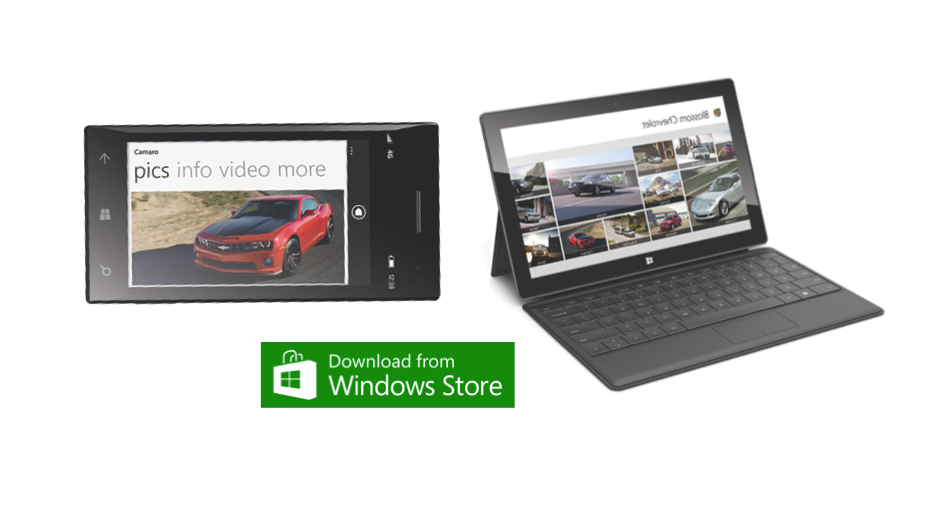
Minneapolis, MN – AutoMotion TV today announced the release of the AutoMotion TV Dealer apps for Windows 8 and Windows Phone 8. With more and more automotive shoppers using Windows 8 on their tablet and using Windows Phone 8 devices, dealers can now provide customers quick access to inventory, service scheduling, live chat, and more through interactive apps for Windows 8 and Windows Phone 8.

“We’re excited to connect dealers and shoppers through mobile apps,” stated AutoMotion TV President, Ben Anderson. “Windows 8 and Windows Phone 8 users represent an increasing percentage of the mobile market, and we’re pleased to provide a quicker and more convenient way for them to interface with their dealership.”

“We’re pleased AutoMotion TV is bringing its existing dealer base, technology, and mobile leadership in the automotive sector to Windows 8 and Windows Phone 8,” stated John Richards, senior director of Windows App Marketing for Microsoft Corp. “With the AutoMotion TV Dealer apps, Windows 8 and Windows Phone 8 users looking to purchase a vehicle can easily and conveniently interact with dealers at home or on-the-go from inventory research to service scheduling.”

Using the AutoMotion TV apps for Windows 8 and Windows Phone 8, you can research new vehicles through beautiful imagery and video, chat with a live dealer representative, or schedule vehicle service through the app. The app gives instant access to current dealer inventory, incentives, and vehicle trade-in valuations.

The AutoMotion TV apps for Windows 8 and Windows Phone 8 are now available for download in the Windows Store and Windows Phone Store respectively.

About AutoMotion TV

AutoMotionTV Dealer App is a leader in mobile apps for automotive dealers. The company’s mobile solutions provide customer access to dealer inventory, service scheduling, live chat, and more. AutoMotionTV helps dealers drive more sales and service revenue through mobile.  

How To: Mobile Location Targeting For Automotive Dealers

Reach the Right Customer, In the Right Place, at the Right Time
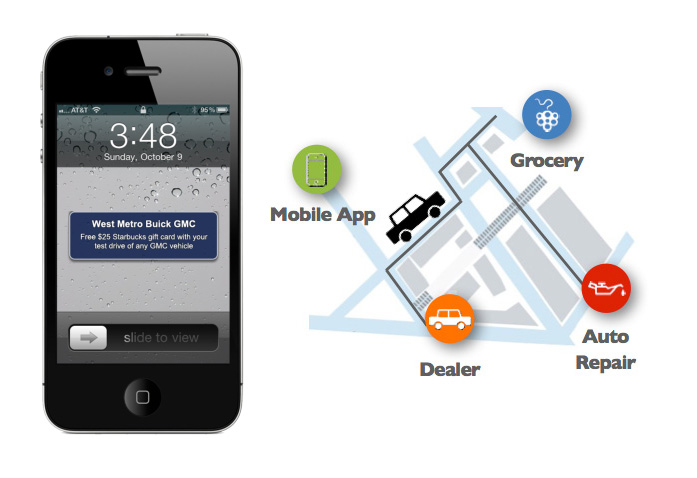
Dealers can now target mobile shoppers based on their location. AutoMotionTV’s new Location Targeting feature allows dealers to identify up to 5 physical locations in their area; they can put a tracker on these locations which can then be used to target mobile shoppers. When a mobile shopper visits one of these locations, a special offer from the dealership is automatically sent to the customer’s phone.


Demographics
  • Dealers can customize their location targeting to reach customers based on demographic characteristics
  • Segment your marketing to reach certain customers
  • Utilize your dealerships strengths to provide potential and current customers with the best offers in your area

Utilize surrounding dealerships, service shops and automotive centers to promote your business.
  • Place location targets on these places and then market promotions and specials to draw customers back to your dealership
  • Boost revenue from your service department by creating offers that beat the surrounding competition
  • Get a one-up on competing dealers by providing more attractive specials that can be sent directly to the consumers phone


Drive Loyalty and Enhance Relationships
  • Reward customers with discounts, promotions and sale specials that will keep them coming back
  • Utilize location targeting to provide customers with great experiences, boosting your trust and value index
  • Reach loyal customers and continue to build your relationships with them
  • Utilize your current loyalty programs features to create even stronger marketing promotions

Re-targeting Consumers
  • Re-target consumers who have downloaded your app to drive continued engagement and increase utility
  • Contact prospecting clients more readily by connecting straight with their mobile device
  • Utilize seasonal offers to get the most from your sales and service departments

Contextual Approached
  • Connect with customers at moments in which your dealership can provide them the most value
  • Couple your location targets with your marketing campaigns to increase everything from sales and service to keeping repeat customers in the know

DEALER SPECIFIC ADVANTAGES                                                   
 
Sales Advantages:
  • Advertise your specials
    • Competitive cash back offers
    • Tent sales
    • Leasing specials
    • Used car specials

Service Advantages:
  • Service specials
    • Oil Changes
    • Tire rotations
    • Seasonal promotions

Location:
  • Use your competitors to your advantage
    • Competitor Dealers
    • Midas/Jiffy Lubes
    • Grocery Stores
    • Local Body Shops

Location Targeting Message Examples:
  • Today only $500 off the purchase of any new Ford Fiesta! Hurry in this offer won’t last!
  • You’ve been selected for a limited one time only $500 off special of any new 2013 model year vehicle!
  • Don’t let winter run your life, equip your vehicle with a set of snow tires today!
  • Maintenance is key to long vehicle life, guarantee your vehicle stays running strong with 20% off all oil changes this weekend only!
  • Beat the heat, make sure your air conditioning system is in tip top shape! Head down for 15% off all A/C diagnostics.
 
Utilize location targeting to its fullest. Couple your location targets with your marketing campaigns to increase everything from sales and service revenue to keeping repeat customers in the know.
This tool is virtually limitless and allows a dealer to customize their marketing efforts even further. Too many cross shopping customers? Turn them back to your dealership by offering them sales and service specials while they are on your competitors lot. Tailor each location target to create the greatest benefits for your dealership and create an interactive on-the-go marketing strategy that is sure to please your present and future customers.


By Josh Knutson 

Monday, March 5, 2012

Using Mobile Apps as a Retention Tool


John Roth, Internet Director of Roseville Toyota, discussed the use of a dealer app to keep customers coming back to the dealership. “Things are changing,” stated Roth. “Through AutoMotionTV we designed a very good app, a sticky app designed to bring the customer back.”

Dealerships who have implemented the AutoMotionTV Dealer App are able to retain cross-shoppers. Customers tend to use a search engine rather than revisit a dealership's mobile website after their first visit. A mobile app is a constant reminder of vehicle service needs by default as it is located on the customer's home screen on their smartphone. Dealership inventory, specials, contact information, etc. are at the customer's fingertips.

Selling a car isn't the app's only purpose. "You don't want to put an app out there just to buy a car," John Roth explained. "You want to sell a car, but you want people to come back to you when they need oil changes, and you have to be able to do that so they remember you."

Roseville Toyota also uses their dealership app on the sales floor. "It's really neat to see the customer's reaction when a sales person it talking about vehicle stability control and being able to show them in a video on the iPad. When we flip it around they can see how it actually works rather than trying to describe it. People relate to the iPad because they sit at home and play with them."

Thursday, February 2, 2012

AutoMotionTV Dealer App Introduces “Dealer App Extensions” at NADA

AutoMotionTV, a leader in mobile apps for dealerships, is set to showcase the flexibility of their dealer app product at the NADA Convention and Expo February 3-6 in Las Vegas. Visit AutoMotionTV at booth #3555.

AutoMotionTV Dealer App Extensions allow dealers to integrate key features into their mobile app. Dealers are using the platform to add roadside assistance, service scheduling, mobile coupons, credit apps, live chat, and many other features to their dealer apps.

Dealer App Extensions can be integrated into any AutoMotionTV Dealer App product at no additional charge.

“We’re excited about the variety of ways our dealers are using Dealer App Extensions to cater to their mobile customer,” stated AutoMotionTV President Ben Anderson. “No one in the industry has built a platform for dealers with this level of flexibility,” Anderson continued. “The sky’s the limit regarding what dealers can provide their customers in a mobile app experience.”

Dealers are using mobile apps to create long term relationships channels with their customers. Roseville Toyota’s Internet Director, John Roth, expressed “If you can make the customer loyal to the brand AND you as a dealership, you’re setting yourself up for future sales.”

This year’s NADA Convention and Expo will be held at the Las Vegas Convention Center and focuses on pushing dealerships to new heights in order to keep up during a challenging and uncertain time.

Tuesday, January 10, 2012

Scheduling Service with Dealer App


An effective and efficient way to keep in contact with customers regarding service maintenance is through a dealership mobile app. The service department can leverage a dealer app to increase service appointments using push notifications.

Dealers can compose a service push notification message right within the AutoMotionTV backend. When the customer receives this notification they can schedule a service appointment while on the go.

“It is about selling cars, but I believe we’re experiencing a paradigm shift in our business," explained Roseville Toyota Internet Director, John Roth. He continued, “The front end of our business is service. If you can create a great app that causes people to come back (i.e. features such as roadside assistance, service scheduling, coupons) then you are building the relationship with the customer right up front.”

The schedule service feature of the Dealer App is also important to the customer. When a customer is reminded that they need an oil change or other vehicle service they can use the dealership’s app on their phone and click to call service or schedule service right on the app. Using the Service feature, the customer is able to quickly connect with the dealership at their convenience.

Monday, December 19, 2011

AutoMotionTV Releases Data on Dealer App Usage

AutoMotionTV analyzed over 70,000 application usage sessions from dealer mobile apps across the country. These dealer apps allow customers to interact and communicate with their dealer using their mobile phone. (Click images to enlarge).

Data highlights include mobile app engagement statistics, showing 35% of users spending between 1-3 minutes in the app, while 21% spent 3-10 minutes in app.


Retention data showed that 63% of users launched their dealer app multiple times the first or next day after download.


Data also showed a breakdown of device types, citing 61% using Apple iPhone, iPad, or iPods while Samsung-branded Android devices were the second largest.

“We’re excited to release this data and plan to continue providing a look at mobile apps in the dealership market”, stated AutoMotionTV President Ben Anderson.

With the number of Smartphone owners on the rise, many dealerships have considered new ways to connect with customers. Increasingly dealers are implementing mobile apps to capture mobile visitors, increase customer retention, and enhance engagement.

Thursday, November 3, 2011

Mobile Visitors on the Rise


Dealership mobile visits are on the rise...

We know that the number of mobile devices accessing the web are increasing on a daily basis. What you might not know, however, is the approaching mobile tidal wave reports are predicting.

Cisco’s spring 2011 study cites 2010 mobile data traffic nearly tripled (2.6x) for the third year in a row. A Tech Crunch article states mobile traffic is expected to rise 40x in the next 5 years. Fortune’s August 2010 article sums it up: “The numbers don’t lie: Mobile devices overtaking PCs.”

The approaching tidal wave of mobile devices is creating a tsunami. In response, we need to evaluate how mobile users are connecting with our digital storefront.

Your Dealership Mobile Visitors

Do you know how much mobile traffic your site receives? Here is how to look this up with a Google Analytics account:

Log in to your Analytics account.
Once logged in, you need to look on the left hand column for “Visitors.”
Under “Visitors,” click on “Mobile.”
You will then see statistics of people who viewed your site with mobile phones.

Most likely you will be surprised at the amount of mobile traffic to your site. What you will find even more interesting – look at how that number of mobile hits has increased over the last few months. DealerRefresh showcased this topic in May of 2010. A lot of great information on mobile can be found by reading the comments section from participating dealers.

Hosting the video series “Mobile and the Dealer” allows me to discuss with dealerships around the nation. Dealers are consistently reporting 15-20%+ of total web traffic coming from mobile devices. This has increased ten fold for some over the last 12 months!

Bouncing or sticking?

Pay attention to how mobile visitors are engaging on your site. Specifically look at bounce rates of mobile visitors and compare them to traditional visitors. If you’re like many, you’ll see sky-high bounce rates on your mobile visitors. In this podcast: Eric Hanson talks about mobile visitor bounce rates of vegas.com and how optimization strategies effectively lowered those stats.

Understanding Mobile Visitor Behavior

Several reports are showing different behavior patterns for mobile visitors vs. desktop. This only makes sense, but we are now seeing data to back it up. What’s clear: giving a mobile user a desktop experience results in bounces and decreased conversion, if any.

Time on site metrics for traditional desktop users continues to be higher than metrics for mobile devices. Mobile visitors are on the go. They consume information many times in sections rather than a single sitting. The essence of being on the go doesn’t allow for prolonged spans of attention. An interesting study by ClickTale, puts some numbers to the speculation that mobile users don’t like to scroll. Long loading times, scrolling, zooming,: – all of these functions are turns off and contribute to bounces for a desktop formatted website.

Capturing Mobile Visitors

Top dealerships are providing a mobile-friendly experience for their customers. These dealerships are using mobile sites and dealership mobile apps designed to capture the customer, providing first the information they are seeking, then spurring them to action. If you buy a mobile site or mobile app from a quality vendor serving the dealer market, you’ll see a lot of attention has been placed on channeling the customer through a specific set of processes.

Now that dealer apps can be downloaded right from the dealership website, dealers are using apps to create long-term relationship channels with the customer from pre-sale to post-sale service and incentives.

As mobile device traffic increases, make sure your marketing strategy doesn’t forget your mobile customer.


Thursday, September 29, 2011

Dealers: The Time to Start Investing in Mobile Apps is NOW


In the article “Top 5 Reasons your Business Should Have a Mobile App,” Manish Sehgal hits the nail on the head when regarding the importance of mobile apps:

…Mobile apps give you a direct channel of communication to your clients and fans, which can be used to push out exclusive and new content instantly to app holders. The key is not to treat your mobile app like a website. Your website is your billboard or the yellow pages. Once people find you, encourage them to grab your app. Use your app to offer special discounts, share exclusive content, or at least give app holders first dibs on whatever is new and special…

At AutoMotionTV, we can't emphasize enough how the time to start implementing dealership apps is now. A lot of times dealers are unsure about forming a mobile strategy. They want to wait until the market’s right, the product’s right, or the timing is right. And that approach just will not work with mobile.

Mobile is very similar to social media platforms such as Facebook. Facebook’s true value is when we as a dealership can get enough “fans” or enough “likes” to our dealership page which then allows us one on one access to communicate – it’s a communication channel with the customer. Dealership apps are very similar.

Mobile apps for dealerships are effective and allow us to have a large user base to communicate with. And so therefore, it is paramount today that you get a dealership mobile app out into the market. Start promoting, start marketing, and start bringing that mobile experience to your customers.

Results:

At AutoMotionTV, we’ve launched apps for dealers across the nation with results – thousands of results. Three weeks after launching the University VW app, over 1500 downloads were achieved. Weber Chevrolet brought on 1200 users in the first two months with their AutoMotionTV Dealer App. Start building your future customer communication channels now through mobile!

Tuesday, April 12, 2011

IDC: 8 Stats Why the Post-PC, Mobile Era Is Upon Us

Eric Lai | Mar 16, 2011

Big market researchers are rarely at the forefront of tech trends, as they must balance the viewpoints of startups, established vendors and enterprise IT buyers.

What firms like Gartner and IDC excel at is being a belwether for emerging trends, and providing empirical validation for them.

At its Directions 2011 conference in San Jose today, IDC Corp. analysts argued that we are entering the post-PC era of computing overflowing with data, devices and apps.

Ironically, this is a drum that SAP has been banging loudly for the past year. And gratifyingly, it is nearly identical to the Unwired Enterprise vision that Sybase has promoted since the middle of the last decade (see this whitepaper, which I had a hand in, summarizing this vision).

Here are some of the stats IDC shared, along with the implications.

1. Stat: It is 25 years (1986) since the industry began moving en masse towards client/server away from mainframes.

Implication: We are at similar transition from PC-server towards mobile devices. Already, there are “trillions of smart ‘things’ (sensors, devices, etc.), billions of users, millions of apps,” says Frank Gens, chief analyst for IDC.

2. Stat: 3 of the biggest companies that failed to transition to client-server were Cullinet (database maker that avoided new retailing model), Wang (word processor maker that chose CPU ignored by software developers) and Digital (overvalued by Wall Street).

Implication: Companies that made right moves made the leap: Dell (sold PCs by phone), EMC (took regular hard disks into the enterprise) and SAP (brought ERP from mainframe to client-server).

3. Stat: 80% of new enterprise apps to be distributed via the cloud. By 2014, 30% of enterprise application spending will be on the cloud.

Implication: Even enterprise apps will follow Apple’s App Store model, argues Gens.

4. Stat: There are 1.3 million mobile apps today, versus 50,000 to 75,000 PC applications, says Gens.

Implication: Most new apps will be vertical or industry-specific solutions.

5. Stat: 1.8 Zettabytes (1.8 billion TERABYTES) of data will be stored in 2011, up 47% year-over-year. That will grow to 7 Zettabytes in 2014.

Implication: “This is about BIG data,” says Gens, not relational databases. “This BREAKS traditional databases.”

6. Stat: 500 million smartphones and tablets to sell in 2011, versus 380 million PCs.

Implication: This is the transition year in which devices will pass PCs permanently.

7. Stat: Only 50% of smartphones and 20% of tablets in enterprise bought by IT, according to fall 2010 IDC survey.

Implication: Bring Your Own Device is huge, says IDC analyst Bob O’Donnell, and managers will need to account for that.

8. Stat: Worldwide, the average affluent consumer owns 4.8 devices, according to a recent IDC survey. In the US, that is up to 6.6 devices.

Implication: The market is hugely fragmented.


View Original Article: B2C

More information on the AutoMotionTV Dealer App.

Thursday, April 7, 2011

HTML5 experience is subpar when compared to apps: CTIA panelist

Discovery

Discovery iPad app

ORLANDO, FL – The mobile apps versus Web debate took center stage during a panel at International CTIA Wireless 2011's Mobile Marketing & Promotion pre-conference program.

During the “Mobile Applications – The Rumors of Death are Highly Exaggerated” session, speakers talked about the new ideas driving mobile interaction and providing additional consumer touch points for agencies and brands through specially developed applications. The panel was moderated by Steve Spencer, president of Cayuga Service, New York.

“I don’t think apps are dying,” said Michael Schneider, CEO of Mobile Roadie, Los Angeles. “I think they need a reason to exist and right now a user experience on native apps is high and on HTML5 it’s low.

“A lot of people are looking for a direct revenue from apps,” he said. “I don’t know if all the mechanisms are there.”

According to Sean Rosenberg, managing director Grapple Mobile USA, New York, some applications are dying quickly.

“Location is a defining factor,” Mr. Rosenberg said. “Why make something that is customizable for a mobile device?

“If you’re seeing high repeat usage of mobile, segment that,” he said. “For publishers, there’s eyeballs to be had – there’s media to be created through these apps and sold.

“To increase the number of transactions and increase customer base – that’s where we see a lot of power.”

Android vs. iPhone
According to the panelists, companies that want to break into the mobile space should look at starting on Apple and Google operating systems.

“We started on Apple,” Mr. Schneider said. “I still think it’s the best platform to start.

“Android is catching up quickly,” he said. “In the next year, there are going to be three leaders – there’s going to be iPhone, Android and really, I don’t know what else.

“In general the iPhone and Android provide ease of use for companies looking to develop an application.”

Between iPhone and Android devices, Google has not figure out the payment mechanism of that, per Ted Shelton, CEO of Open-First, Milwaukee, WI.

“Apple has,” Mr. Shelton said. “Apple gets people to pay for apps.

“There are going to be millions of apps and people are only going to use a few,” he said.

Consumer experiences
According to Mr. Shelton, consumers want apps because they want a different experience than the mobile Web.

However, not every brand is using applications to their advantage.

Mr. Shelton said that companies should incorporate location-based services into their mobile marketing initiatives.

“If you look at mobile as an opportunity to rethink the work flow, use those location-based services,” Mr. Shelton said. “There’s an accelerometer on your device, you can use that.

“You can ask consumers if they are satisfied or not with the application by shaking their device,” he said. “You can get real-time feedback.”

Additionally, Mr. Shelton said that with mobile applications, comes mobile advertising.

However, advertising is in a long decline, per the executive.

“Advertising is fundamentally one way,” Mr. Shelton said. “Consumers would rather interact and once they interact they want to have an interesting dialogue.

“Ever since Apple introduced in-app purchases, it has creating a more compelling experience,” he said. “You will see Angry Birds get a seven-figure deal with in-app purchases.

“It won’t be an ad - it’ll be product placements and lead to a click rate.”

Ari Tiktin, director of Discovery Communications, Silver Spring, MD, said that the company mainly uses free and ad-supported applications.

Discovery sells mobile as a larger digital package.

“What’s different for us is where do you spend your money,” Mr. Tiktin said. “How do you get your app discovered?

“We try to put all of the stops,” he said. “We have great social media reach across all our shows.

“We do just whatever we can to promote our apps.”

Across platforms
According to the speakers, companies should make sure that their applications are available across key smartphone platforms.

For example, a consumers who is thinking of buying a Windows Phone 7 device, but finds out that Angry Birds is only available on iPhone and Android devices, will lose interest in Windows Phone 7.

Companies should make sure that they are on all devices to keep the user engagement and reach high.

“I think apps create the best experiences today,” said Mark Hyland, vice president of QuickPlay Media, Toronto, ON. “To a certain extent, an app can take better advantage of that hardware.

“Apps can normalize an experience across multiple devices,” he said. “Ads will work for apps with large scale usage.

“If people are going to use it everyday, then an app is definitely the way to go.”


View Original Article: Mobile Marketer